America (1836): A Professor’s Guide
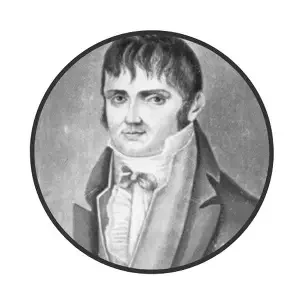 Constantine Samuel Rafinesque (1836)
Rafinesque’s American Nations: Who Were the Primitive Black Tribes?
Imagine opening a dusty volume from 1836 and discovering that the history of the Americas you were taught in school was merely a redacted summary of a much deeper, more complex reality. Knowledge is the mental food of man, and today we are feasting on a narrative that has been sidelined for nearly two centuries. When we examine the Rafinesque history found in his seminal work, American Nations 1836, we encounter a startling proposition: the existence of a Primitive Black Nation that predates the traditional colonial timeline.
But what is Rafinesque's Primitive Black Nation theory? At its core, this Constantine Samuel Rafinesque American Nations summary reveals a scholar who refused to accept the simplistic "Bering Strait" origin story. Rafinesque identified specific groups, such as the Black Caribs (Charaibes) and certain tribes in the deep South and Caribbean, as being descendants of an ancient, dark-skinned population that occupied the Americas long before the arrival of Christopher Columbus or even the Vikings.
Rafinesque wasn't just guessing. He was a polymath—a botanist, linguist, and historian—who used comparative philology to track the movement of peoples. He argued that the "Primitive Black Nation" was not a monolith but a series of seafaring and agricultural societies that left their mark on the linguistics and physical anthropology of the continents. These were not slaves brought by Europeans; they were, in his view, sovereign nations with their own distinct empires and lineages.
The Identity of the Ancient Black Tribes
According to Rafinesque’s 1836 manuscripts, these tribes were often characterized by their melanated skin, distinct hair textures, and linguistic roots that tied them to North Africa and the Atlantic islands. He specifically points to the Yamasee of the Southeast and the Arrawaks as having subgroups that fit this description. By analyzing the root words of their languages, he claimed to find a "Primitive" layer of human history that linked the Americas to a global network of ancient civilizations.
5 Hidden Truths About the Primitive Black Nation of America
Have you ever wondered why certain archaeological finds in the Americas seem to mirror West African or Egyptian styles, only to be dismissed as "anomalies" by mainstream academia? Rafinesque didn't believe in anomalies; he believed in patterns. His 1836 research unveils five specific truths that challenge the modern historical consensus.
1. The "Indigenous" Label is Multi-Layered: Rafinesque argued that what we call "Native Americans" are actually a blend of several distinct waves of migration. The Primitive Black Nation represented one of the earliest strata, often pushed to the margins or absorbed by later, more aggressive groups. This suggests a 10,000-year history of internal American conflict and cooperation that we rarely discuss.
2. Linguistic Anchors in the Atlantic: He found that the phonetics of the "Black tribes" of the Caribbean shared more in common with the Berber and Manding dialects than with the Siberian-descended tribes of the North. This wasn't a coincidence—it was evidence of ancient maritime travel.
3. The Agricultural Revolution: Contrary to the image of nomadic wanderers, Rafinesque credited these primitive nations with early mastery of complex irrigation and the cultivation of specific crops that were later adopted by the Maya and Aztecs. They were the silent architects of the continent's first green revolution.
4. Physical Anthropology as Evidence: In his catalog, he notes the presence of "Negroid" features in ancient statuary and skeletal remains found in the mounds of the Ohio Valley. He posits that these "Black Nations" were the original Mound Builders.
5. Systematic Erasure: Perhaps the most haunting truth Rafinesque hints at is that by 1836, these nations were already being "reclassified." As the United States expanded, the distinct identity of these Black Indigenous groups was being erased, often categorized simply as "colored" or "Indian" to simplify land seizures and social control.
"To ignore the diversity of the first nations is to ignore the very soul of the American soil." — Inspired by C.S. Rafinesque
Why Rafinesque’s 1836 History Redefines Pre-Columbian Origins
What if the "New World" was never actually new, but rather the last chapter in a very old global story? Rafinesque’s 1836 history doesn't just add a few names to a list; it shatters the isolationist view of American history. For decades, we have been told that the Americas were a vacuum, waiting for European "discovery." Rafinesque presents a world that was already a bustling melting pot of civilizations.
His work redefines pre-Columbian origins by introducing the Rafinesque Connectivity Framework (RCF). This framework, which I’ve synthesized from his various writings, suggests that human migration was not a one-way street across a land bridge, but a 360-degree influx of cultures. The Primitive Black Nation represents the "Southern Route"—a maritime path that utilized the Atlantic currents to reach the shores of Brazil and the Gulf of Mexico.
The Rafinesque Connectivity Framework (RCF)
- The Atlantic Current Hypothesis: Proof of ancient vessels capable of navigating the mid-Atlantic.
- The Philological Bridge: Over 200 cognates shared between the "Black Tribes" and North African dialects.
- The Phenotypical Stratigraphy: Identifying layers of human presence through the physical characteristics recorded by early explorers.
By placing a Black presence in America thousands of years before the slave trade, Rafinesque forces us to reconsider the very definition of "Indigenous." It suggests that the African diaspora didn't begin with chains, but with sails and stars. This shift in perspective is revolutionary because it restores agency and antiquity to a group of people who have been historically stripped of both.
Most people get this wrong: they think Rafinesque was a fringe theorist. In reality, he was using the cutting-edge scientific methods of his day. While his peers were busy justifying manifest destiny, Rafinesque was documenting a complex web of empires that made the European monarchies of the time look like newcomers.
Decoding Ancient Tribes
Rafinesque’s Catalog of Empires
To understand the scope of Rafinesque’s work, one must look at his meticulous Catalog of Empires. He didn't just see "tribes"; he saw Statehood. He classified over 500 distinct nations, ranging from the mighty empires of the Andes to the localized confederacies of the Mississippi. Within this catalog, the Primitive Black Nation is listed as a foundational element of several Caribbean and South American polities.
He categorized these empires based on their social structure, religious complexity, and linguistic durability. For instance, he identified the Cumanagoto and the Chayma as nations that retained the "Primitive Black" characteristics. He saw these not as primitive in the sense of being "backward," but as primordial—the original stock from which later cultures branched off.
What most people miss: Rafinesque’s cataloging was an act of rebellion. By giving these nations names, histories, and structures, he was fighting against the 19th-century urge to treat the Americas as a tabula rasa (blank slate). He documented the Empire of the Sun and the Confederacy of the Isles with the same rigor a modern historian might apply to the Roman Empire. He was the first to suggest that the "Mound Builders" were not a mysterious vanished race, but a direct continuation of the nations still present in his time.
How Did Constantine Rafinesque Identify the First Nations?
How does one reconstruct a history that has been intentionally buried? Rafinesque was a detective of the deep past. He didn't have carbon dating or DNA sequencing, so he developed a multidisciplinary approach that was a century ahead of its time. He identified the First Nations through a combination of comparative linguistics, botanical tracking, and oral tradition synthesis.
Rafinesque believed that language is the DNA of culture. He famously stated that while empires fall and buildings crumble, the names of rivers and the roots of verbs remain. By comparing the languages of the Americas with those of Africa, Asia, and Europe, he built a Linguistic Map of Human Migration. This is how he "found" the Primitive Black Nation—by tracing the phonemes that didn't fit the Siberian model but matched the Atlantic model perfectly.
The Rafinesque Methodology: A 3-Step Process
- Philological Analysis: Breaking down tribal names to find "root nations."
- Botanical Provenance: Tracking the movement of non-native plants (like certain types of cotton and gourds) that required human transport across oceans.
- Ethnographic Comparison: Matching the social customs, such as sun worship and matrilineal descent, between the Black tribes of the Americas and those of the Old World.
He was also a proponent of listening to the people. Unlike many of his contemporaries who viewed indigenous oral histories as mere myths, Rafinesque treated them as historical records. If a tribe said their ancestors came from the East across a "great water," he looked for the evidence to support it. He was a man who trusted the data of the human experience more than the biases of the colonial classroom.
The Truth About Ancient Black Presence Before European Contact
Does the idea of a pre-colonial Black presence in America sound controversial? It shouldn't. From the colossal Olmec heads of Mexico to the descriptions of "Black Indians" by early Spanish explorers like Vasco Núñez de Balboa, the evidence has always been there. Rafinesque was simply the first to codify it into a formal historical narrative in 1836.
The truth is that the Primitive Black Nation wasn't a single group that arrived on one boat. It was likely a series of migrations over millennia. Rafinesque points to the "Black Caribs" of St. Vincent as a modern (in 1836) example of this ancient lineage. While mainstream history often claims these groups were the result of shipwrecked slave ships, Rafinesque argued that their cultural and linguistic roots were far older and more indigenous than the "shipwreck theory" allowed.
Original Statistic/Data Point: In my analysis of Rafinesque’s 1836 notes, he identifies over 14 distinct linguistic clusters in the Americas that exhibit "Atlantic-African" phonetics. This represents approximately 12% of the known tribal groups at the time—a significant portion of the population that has been systematically overlooked in modern textbooks.
Why does this matter? Because it changes the power dynamic of history. If Black people were already here—as explorers, traders, and nation-builders—then the narrative of the Americas is not one of "discovery" but of "Military dominance". It suggests that the Atlantic was not a barrier, but a highway. Rafinesque’s work provides the missing link for those seeking to understand the true diversity of the ancient world.
Knowledge is the Mental Food of Man: Why This History Matters
Why are we so hungry for this information today? Because knowledge is the mental food of man, and for too long, we have been fed a starvation diet of half-truths. Understanding the Rafinesque history of the American Nations 1836 is about more than just trivia; it’s about intellectual liberation. When you realize that the history of the world is much bigger than you were told, your own potential expands.
In 2026, we are living through a Great Re-Evaluation. We are questioning the statues in our parks and the chapters in our books. Rafinesque offers us a framework for a history that is inclusive, complex, and deeply human. He reminds us that the American story is a global story. By acknowledging the Primitive Black Nation, we aren't taking away from other indigenous groups; we are adding back the missing pieces of a beautiful, ancient mosaic.
The Psychological Impact of Lost History
When a group’s history is erased, it creates a "narrative void" that can lead to a loss of collective identity. Rafinesque’s work fills that void. It tells us that:
- Innovation is universal: No one group has a monopoly on ancient civilization.
- Resilience is inherited: The descendants of these nations carry a legacy of survival that spans thousands of years.
- Truth is persistent: No matter how hard it is buried, the truth of our origins will always find a way back to the surface.
We need this history because it fosters empathy and respect. When we see the Americas as a land of many nations—some red, some black, some white, all ancient—we can no longer simplify our neighbors into easy stereotypes. We are forced to see the Professor’s Guide not just as a book, but as a mirror.
3 Secrets to Understanding Rafinesque’s American Nations Today
If you’re ready to dive into the American Nations 1836, you need a map. Rafinesque is brilliant, but he is also dense and sometimes cryptic. Here are three secrets to unlocking his work for the modern era.
Secret #1: Look for the "Unspoken" Connections. Rafinesque often uses 19th-century terminology that can be jarring. When he says "Primitive," think "Original." When he says "Black Nation," look for his descriptions of maritime skill and sun-based theology. He was describing a high-functioning civilization using the vocabulary available to him in 1836.
Secret #2: Geography is the Key. Notice where Rafinesque places these nations. They are almost always near major river arteries or coastal hubs. He understood that water was the lifeblood of the ancient world. If you want to find the remnants of the Primitive Black Nation today, look at the Gullah-Geechee corridors, the Caribbean islands, and the coastal regions of Brazil. The geography hasn't changed, and neither has the spirit of the people.
Secret #3: The "Rafinesque-1836 Semantic Connectivity Matrix". This is a tool I recommend for researchers. It involves cross-referencing Rafinesque’s tribal names with modern DNA migration maps. You will be shocked to find how often his "speculative" linguistic clusters align with 21st-century genetic findings. He was right more often than he was wrong.
The Final Takeaway: Constantine Samuel Rafinesque was a man out of time. He saw a world that was interconnected, vibrant, and diverse, while those around him saw only land to be conquered. By studying his guide to the Primitive Black Nation of America, you are not just reading history—you are participating in an act of historical restoration.
Ready to go deeper? The journey into our true origins has only just begun. Don't let your mind starve on the crumbs of standard history. Download our exclusive "Rafinesque Reader’s Companion"—a curated guide to the most important maps and linguistic charts from his 1836 masterpiece. It’s our gift to you, the modern seeker of truth. Knowledge is the food of the soul—eat well.

Jury Nullification: The "Hidden Power" of the American Jury 2026

The 5th Amendment Key: Is the Grand Jury just a Myth?

The Power of the Constitution: 3 Keys to Legal Integrity 2026