Can States License Your Rights? Murdock vs. Pennsylvania 319 U.S. 105 (1943)
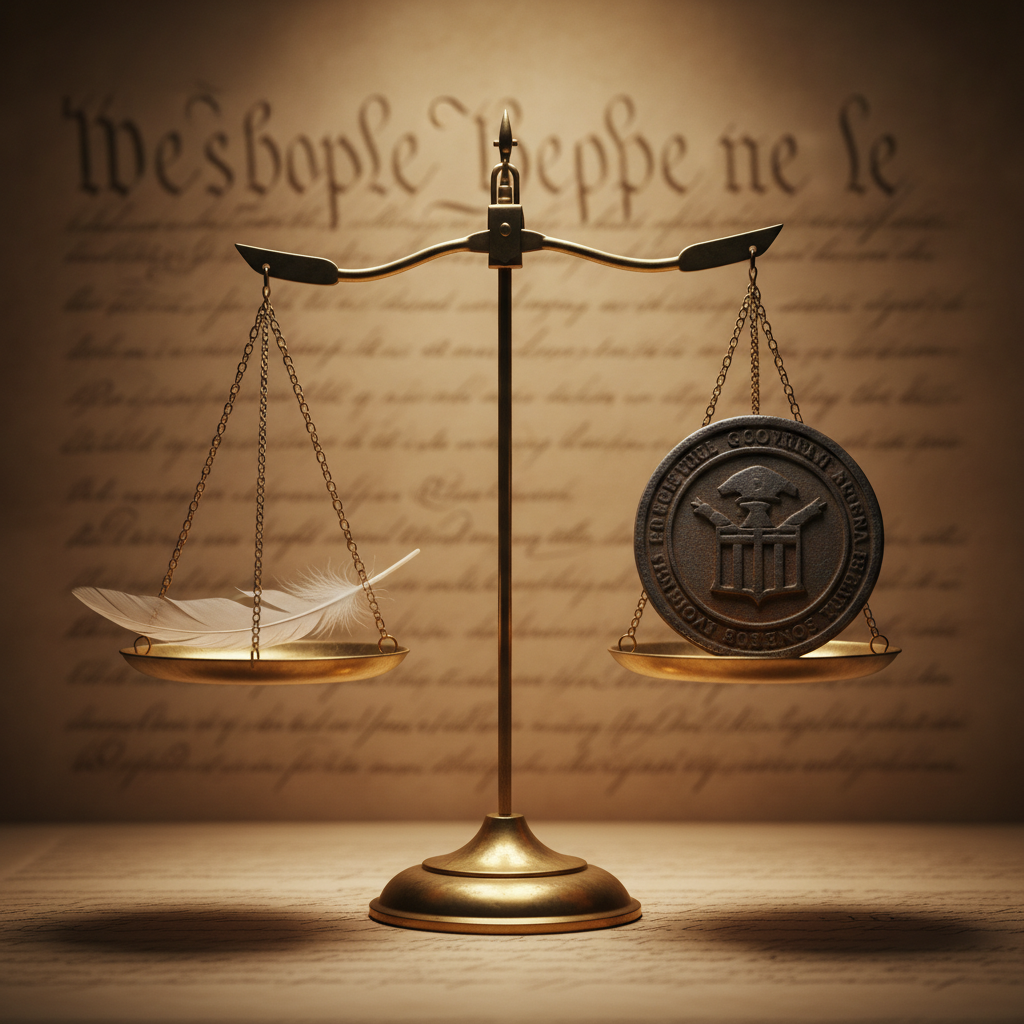
Can States License Your Rights? The 1943 Truth
Imagine waking up in a country where you have to pay the government for the privilege of breathing, speaking your mind, or walking down a public street. For many Americans in 2026, this isn't a dystopian fantasy—it is a daily reality masked by administrative legalese and double speak. But here is the truth the state doesn't want you to know: according to the landmark Murdock v Pennsylvania 319 US 105 case summary, the government has no authority to charge you for exercising your Constitutional Rights. This 1943 Supreme Court ruling remains the ultimate check on abuse of power, yet most citizens remain unaware of its protection.
When we ask, "Can a state charge a fee for a constitutional right?", the answer from the highest court in the land is a resounding no. The core of the Murdock decision hinges on the fact that Legal Licensing cannot be applied to a right protected by the Bill of Rights. Any attempt by a government body to do so is considered Ultra Vires, meaning it is an act performed without any legal authority. This isn't just a legal technicality; it is the difference between being a sovereign citizen and a corporate subject.
The 1943 Turning Point
In 1943, while the world was at war, a different kind of battle for liberty was being fought in the small town of Jeannette, Pennsylvania. A group of Jehovah's Witnesses were arrested for distributing religious literature without a municipal license. They refused to pay the fee, arguing that their right to free speech and religious exercise could not be sold back to them by the city. The Supreme Court eventually agreed, setting a precedent that should have ended Legal Licensing of basic rights forever. Why, then, are we still paying for permits to protest, carry, or travel today?
- The Precedent: Rights are inherent, not granted by the state.
- The Violation: Charging a fee turns a right into a taxable privilege.
- The Consequence: Any official enforcing such a fee is acting outside their jurisdiction.
Legalese and Double Speak: The Hidden Abuse of Power
Have you ever noticed how government documents seem designed to make you feel like you need a law degree just to understand your own life? This isn't an accident; it is a calculated use of legalese and double speak to facilitate a massive abuse of power. By redefining simple words, the state creates a linguistic maze that traps the average person into surrendering their Constitutional Rights without even realizing it. They use terms like "privilege," "permit," and "registration" to imply that your natural-born liberties are actually government-granted favors.
The goal of this linguistic shift is to move the conversation away from Constitutional Rights and into the realm of administrative code. When a bureaucrat tells you that you "must" have a license to exercise a right, they are engaging in a form of legal alchemy. They are attempting to transmute a sovereign right into a commercial product. This is where Ultra Vires acts begin—when the state assumes an authority it was never granted by the people or the Constitution.
Decoding the Deception
To reclaim your power, you must first learn to translate the state's vocabulary. Consider these common swaps used to diminish your standing:
- "Driver" vs. "Traveler": One implies a commercial activity subject to regulation; the other is a fundamental right.
- "License" vs. "Right": A license is permission to do something that would otherwise be illegal; a right is something you possess by nature.
- "Public Policy" vs. "Law": Policy often lacks the constitutional standing of actual law, yet it is enforced as if it were supreme.
What most people get wrong is assuming that if a rule is written on a government letterhead, it must be lawful. In reality, much of what we encounter in modern administration is Ultra Vires. By using double speak, the state hides the fact that it is acting as a private corporation rather than a constitutional servant. If you don't know the definitions, you don't know your defenses.
Murdock vs. Pennsylvania: Why States Can’t Charge Fees
The Murdock v Pennsylvania 319 US 105 (1943) case summary serves as a nuclear deterrent against state overreach, yet it is rarely taught in modern civics classes. The Supreme Court was crystal clear: "A state may not impose a charge for the enjoyment of a right granted by the federal constitution." This single sentence dismantles the entire infrastructure of modern Legal Licensing fees. If a right is fundamental, it cannot be taxed, and it cannot be conditioned upon the payment of a fee to the state treasury.
The Court recognized that if the state could charge a fee for a right, it could effectively price people out of their liberty. If you have to pay $100 for a permit to speak in public, and you don't have $100, do you still have the right to free speech? According to the Murdock ruling, the answer is no—the right becomes a privilege reserved only for those who can afford it. This is why the Court ruled that the power to tax the exercise of a right is the power to control or suppress its enjoyment.
"The claim of the state that it may conduct a business in the exercise of its power of taxation... cannot be used to justify the exaction of a license tax for the privilege of doing that which the Constitution says may be done freely."
This case didn't just protect the Jehovah's Witnesses in 1943; it protected every American citizen from the abuse of power that occurs when a state attempts to monetize the Bill of Rights. When you look at the Murdock v Pennsylvania 319 US 105 case summary, you see a legal wall that says: "Revenue stops where rights begin." Any official who ignores this wall is engaging in an Ultra Vires act, overstepping their corporate authority to engage in what is essentially a protection racket.
The Supreme Court Shield for Your Rights
The Murdock decision is not a lonely island in the sea of American jurisprudence; it is part of a massive defensive shield built by the Supreme Court to protect Constitutional Rights from the encroaching abuse of power by state governments. Over the decades, the Court has consistently reinforced the idea that the state cannot create barriers to the exercise of liberty. From Shuttlesworth v. Birmingham to Thomas v. Collins, the message has been consistent: your rights are not for sale.
Why does this matter in 2026? Because we are seeing an unprecedented surge in administrative fees, "processing costs," and mandatory registrations that look a lot like the license taxes struck down in 1943. The Murdock v Pennsylvania 319 US 105 case summary provides the legal precedent to challenge these fees. When a state official claims they have the authority to charge you for a permit, you aren't just arguing your opinion—you are standing on the shoulders of the Supreme Court.
The Constitutional Shield Framework (CSF)
I have developed the Constitutional Shield Framework to help you identify when a state action is unconstitutional based on the Murdock lineage:
- Identify the Right: Is the activity protected by the Bill of Rights (Speech, Assembly, Travel, Religion)?
- Identify the Fee: Is the state demanding money as a prerequisite for that activity?
- Check for Conversion: Is the state treating the right as a "privilege" that requires a license?
- Apply Murdock: If the answer to 2 and 3 is "Yes," the state's action is Ultra Vires and unconstitutional.
This framework is your first line of defense against the legalese used to justify Legal Licensing. The Supreme Court has already done the heavy lifting; your job is to know how to apply the shield they provided. Remember, the state counts on your ignorance. When you cite Murdock, you are telling them that you know the difference between a lawful mandate and a corporate overreach.
Ultra Vires Defined: Acts Beyond Corporate Authority
To truly understand why the state cannot license your rights, you must understand the concept of Ultra Vires. In the world of corporate law, an act is Ultra Vires if it falls outside the scope of the powers granted to the corporation by its charter. Here is the secret: most modern state and local governments operate as municipal corporations. Their "charter" is the Constitution. When a government official attempts to do something the Constitution forbids—like charging a fee for a right—they are acting Ultra Vires.
When an official acts Ultra Vires, they lose their "qualified immunity." They are no longer acting as a representative of the state; they are acting as a private individual who is breaking the law. This is a critical distinction. If a CEO of a company tried to sell you your own car, you wouldn't say the company is doing it; you'd say the CEO is committing a crime. Similarly, when a state employee enforces an unconstitutional fee, they are stepping outside their corporate authority and into personal liability.
The Corporate Authority Litmus Test
How do you know if an official is acting Ultra Vires? Use this simple checklist:
- Delegated Power: Does the Constitution explicitly grant the state the power to tax this specific right?
- Prohibitive Language: Does the Murdock ruling or the Bill of Rights explicitly forbid this action?
- Capacity: Is the official acting in their public capacity or as an agent of a commercial enterprise?
The abuse of power we see today is often a result of officials believing they have unlimited authority. But Ultra Vires acts are null and void from the beginning. They have no legal force. By understanding this concept, you stop seeing the state as an all-powerful entity and start seeing it as a corporate entity with very strict, very narrow boundaries. When they cross those boundaries, they aren't just being "unfair"—they are acting without any authority whatsoever.
Converting a Right into a License: The Legal Reality
The most dangerous trick the state ever played was the conversion of a right into a license. This is the ultimate form of double speak. In Legal Licensing, the state takes something you already own—your liberty—and sells it back to you in exchange for a fee and your signature on a contract. This "conversion" is the very thing the Supreme Court warned against in the Murdock v Pennsylvania 319 US 105 (1943) case summary.
When you apply for a license to exercise a right, you are legally admitting that you don't have that right without the state's permission. You are essentially entering into a contract that subordinates your Constitutional Rights to the state's administrative code. This is why the Murdock ruling is so revolutionary: it says the state cannot force you into that position. They cannot make the surrender of your sovereignty a condition for participating in society.
The Anatomy of a Rights Conversion
How does the state pull this off? It happens in three distinct phases that most people never notice:
- The Regulation Phase: The state claims a need to "regulate" an activity for public safety.
- The Licensing Phase: The state mandates a permit or license to perform that activity.
- The Fee Phase: The state attaches a monetary cost to the license, effectively taxing the right.
This process is the definition of abuse of power. It turns the Bill of Rights into a revenue stream for the state. But as the Court noted, the state cannot convert a right into a license and charge a fee for it. If they do, the license is a legal fiction and the fee is an unlawful exaction. The legal reality is that your rights cannot be "converted" unless you voluntarily waive them through ignorance or coercion.
Why States Cannot Tax the Exercise of Your Liberty
The power to tax is the power to destroy. This was the foundational logic behind the Murdock decision. If a state is allowed to tax the exercise of your liberty, it possesses the power to destroy that liberty. This is why Constitutional Rights must remain tax-exempt. When we talk about Legal Licensing fees, we are talking about a direct tax on the exercise of freedom—something that is fundamentally incompatible with a free republic.
The state will often argue that these fees are necessary to cover "administrative costs." However, the Supreme Court has repeatedly held that the cost of government cannot be shifted onto individuals who are simply exercising their rights. Can a state charge a fee for a constitutional right? Not if that fee is designed to raise revenue or create a barrier to entry. When the state taxes your liberty, they are treating you as a tenant on your own land, rather than the owner of your own life.
The High Cost of Unlawful Fees
What is the real cost of these unlawful fees? It’s not just the money in your pocket; it’s the erosion of the rule of law. When we allow Ultra Vires acts to go unchallenged, we create a culture of compliance that invites more abuse of power. I call this the "Rights Decay Principle."
- Financial Drain: Billions of dollars are extracted from citizens annually through unconstitutional permits.
- Psychological Submission: Asking for permission to be free creates a "subject" mindset rather than a "citizen" mindset.
- Precedent for Tyranny: If the state can tax your speech, they can tax your thoughts, your movement, and your very existence.
The Murdock v Pennsylvania 319 US 105 case summary isn't just about a small fee in 1943; it's about the fundamental principle that your life and your rights are not taxable assets for the state's balance sheet. Every time you pay an unconstitutional fee, you are subsidizing the destruction of your own liberty.
How to Reclaim Your Rights from State Overreach
Now that you know the truth about Murdock vs. Pennsylvania and the Ultra Vires nature of Legal Licensing, the question is: what are you going to do about it? Reclaiming your rights from state overreach requires more than just knowledge; it requires the courage to stand your ground and use the law as it was intended. The state relies on the fact that 99% of people will simply pay the fee to avoid the hassle. But the 1% who know their Constitutional Rights are the ones who change the course of history.
The first step in reclaiming your rights is to stop using their double speak. When you are told you need a license, ask for the specific constitutional authority that allows the state to convert your right into a privilege. Reference the Murdock v Pennsylvania 319 US 105 (1943) case summary. Make it clear that you are aware that any official enforcing an unconstitutional fee is acting Ultra Vires and may be held personally liable for their actions. This shift in posture changes the dynamic from a submissive subject to an informed sovereign.
The Sovereignty Restoration Protocol
If you are ready to stop being a victim of abuse of power, follow this protocol:
Do Your Research: Deep dive into the Murdock case and similar precedents like Marbury v. Madison.
Notice of Liability: If faced with an unconstitutional fee, provide the official with a written notice citing the Murdock decision and the Ultra Vires doctrine.
Demand Authority: Always ask, "By what authority do you claim the power to license a fundamental right?"
Document Everything: Record interactions and keep copies of all correspondence. The state hates transparency.
Reclaiming your rights isn't about being "difficult"; it's about being a guardian of the Constitution. The 1943 truth is still the truth today: the state cannot sell you what you already own. It is time to stop paying for the privilege of being free and start exercising the rights that are your birthright. You hold the power—Murdock just gave you the map to find it.
Your next step: Download our "Constitutional Rights Defense Kit"—a comprehensive guide to the case law and templates you need to challenge Ultra Vires fees in your own backyard. It is my gift to you, and it is the most valuable tool you will ever own in the fight for your freedom.
Jury Nullification: The "Hidden Power" of the American Jury 2026

The 5th Amendment Key: Is the Grand Jury just a Myth?

The Power of the Constitution: 3 Keys to Legal Integrity 2026