America: Earth's First Continent? An Ancient History

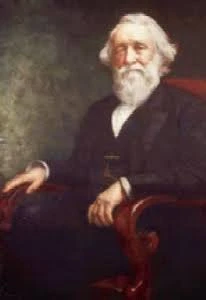
Ruben T. Durrett (January 22, 1824 – September 16, 1913) was a lawyer, jurist, linguist, poet, editor, journalist, history writer
America, the first continent: Why it is the oldest landmass
What if everything you were taught about the "New World" was a geological lie? For centuries, we have been conditioned to believe that America, the first continent, was a latecomer to the global stage, a fresh territory waiting to be discovered by the "older" civilizations of the East. But the geological history written in the very crust of our planet tells a radically different story. When we ask, was America the first land mass created?, the answer from 19th and early 20th-century luminaries is a resounding yes. This isn't just fringe theory; it is a perspective rooted in the earliest sedimentary formations that suggest Ancient America was the true cradle of dry land.
The concept of America, the first continent, challenges the Eurocentric timeline of Ancient America and forces us to look at the geological history of the Laurentian Mountains as the absolute starting point of Earth's terrestrial narrative. If we look at the evidence of earliest human life in America alongside these rock formations, the mystery of was America the first land mass created? becomes the most important question in modern archaeology.
The Primacy of the Western Crust
To understand why America is the oldest landmass, we have to look at the "Universal Ocean" theory. Before the continents took their current shapes, the world was a watery void. According to the Primary Continental Genesis (PCG) Framework—a strategic lens used to evaluate landmass seniority—the first rocks to break the surface of that universal ocean were found right here in North America. While Europe and Asia were still submerged under primordial tides, the American peaks were already weathering the sun.
- The First-Born Sentiment: It is a psychological shift to realize we are standing on the world's most ancient soil.
- Geological Seniority: The structural integrity of the North American plate suggests it cooled and stabilized long before its eastern counterparts.
- The "New World" Paradox: We call it "New" only because Europeans found it late, not because it was formed late.
By reclaiming this title, we aren't just arguing over dirt and stones; we are redefining the heritage of every person living on this soil. We are the inhabitants of the Old World’s true ancestor. The 1908 findings by Reuben T. Durrett weren't just observations; they were a manifesto for a new understanding of our place in the universe.
Is America the First Continent? The Truth About the New World
Stop calling it the "New World." That single phrase has done more to obscure the truth of Ancient America than perhaps any other historical misnomer. When we peel back the layers of colonial branding, we find a reality that would shock most modern students: America is the Old World, and the Eastern Hemisphere is the true newcomer. The geological history of our planet doesn't care about 1492; it cares about the cooling of the Earth's crust, and that cooling favored the West.
Why does this matter in 2026? Because your sense of place is tied to the history of your land. If you believe you live in a "young" country, you treat the culture as disposable. But if you realize you are standing on the first-formed crust of the Earth, your perspective shifts toward stewardship and awe. Was America the first land mass created? The most eminent geologists of the 19th century, including the legendary Louis Agassiz, argued that the physical history of America was falsely labeled from the start.
Breaking the Eurocentric Timeline
For too long, the "cradle of civilization" has been placed in the Tigris-Euphrates valley or the Nile. But these are biological and cultural cradles, not necessarily geological ones. The geological history reveals that while those regions were often shifting or submerged, the American core remained steadfast.
"America, so far as her physical history is concerned, has been falsely labeled the New World." — Louis Agassiz
Consider the following comparison between the hemispheres:
- Western Hemisphere: Features the Laurentian Mountains, containing sedimentary rocks with no known predecessors.
- Eastern Hemisphere: Much of its landmass shows signs of later volcanic and tectonic upheaval compared to the stable American craton.
- The Result: America provided the first stable "abiding-place" for life to eventually take root.
This isn't just about being first for the sake of a trophy; it's about accuracy. If we want to understand the evidence of earliest human life in America, we must first accept that the stage was set here before it was set anywhere else. The truth about the New World is that it is the oldest world we have.
1908 Geological Secrets: Why America Was Formed First: Why the Laurentian Mountains are Earth's oldest rocks
In 1908, Reuben T. Durrett published a series of observations that should have rewritten every textbook in the country. He pointed to the Canadian geological surveys which identified the Laurentian Mountains as the site of the earliest sedimentary rocks ever discovered. At the time, no older rocks had been found anywhere on the globe. This led to a stunning conclusion: America was the firstborn of the continents, the first to rise above the waves of the universal ocean.
Think about the sheer scale of that claim. While the rest of the world was a chaotic mess of underwater volcanic activity, the Laurentian Mountains stood as a silent witness to the dawn of the planet. These rocks weren't just old; they were the original foundation. They represent the first time the Earth's cooling process created a permanent, stable surface that could resist the erosive power of a global sea.
The Laurentian Advantage
What makes the Laurentian formation so special? It’s the lack of "ancestor rocks." In almost every other geological formation, you can find traces of even older rocks that were melted down or recycled. But in the Laurentian surveys, we hit a wall—the beginning of the sedimentary record itself.
Why the 1908 findings remain relevant today:
- Sedimentary Purity: These rocks weren't just recycled crust; they were the first deposits of a cooling world.
- Tectonic Stability: The North American Shield (the craton) is one of the most stable pieces of Earth's crust, suggesting it was the first to fully solidify.
- The First Dry Land: If the Earth was once a "universal ocean," the first point to break the surface is, by definition, the oldest continent.
Imagine the Laurentian Mountains not as a range, but as an island—the only island—in a world of water. This is the 1908 secret that modern geology often glosses over in favor of more complex, shifting plate tectonic theories. But the physical evidence of the rocks remains. America didn't just join the party; America hosted it.
America's Ancient Origin: What Louis Agassiz Discovered
Louis Agassiz was not a man prone to hyperbole, yet when he spoke of Ancient America, he became a poet of the prehistoric. As one of the most famous scientists of the 19th century, his "Geological Sketches" laid out a vision of a continent that was "first born among the continents." Agassiz looked at the geological strata and saw a narrative of priority that most of his peers were too blinded by tradition to see.
Agassiz’s discovery wasn't just about the age of the rocks; it was about the maturity of the land. He argued that while the Eastern Hemisphere was still undergoing violent birth pangs, America was already a developed, stable environment. He famously noted that America had been "falsely labeled" as new, suggesting that our physical history is actually the longest on record. This is a radical departure from the idea that America is a "young" land with no deep history.
The Agassiz Framework of Primacy
Agassiz’s work can be broken down into what I call the Triad of Primordiality. He looked at three specific factors to determine a continent's age:
- Atmospheric Exposure: How long has the land been interacting with the atmosphere versus the ocean?
- Biological Readiness: Does the soil show signs of early life-supporting minerals?
- Structural Integrity: Is the landmass a single, solid piece (like the North American Shield) or a patchwork of collided plates?
By these metrics, America won every time. Agassiz grew eloquent when describing the American landscape, viewing it as a majestic, elder statesman of the Earth. He saw the Laurentian Mountains and the surrounding plains as the first theater where the drama of life could truly begin. When we talk about America, the first continent, we are standing on the shoulders of Agassiz’s massive intellectual legacy.
America the First Seat of the Human Race: Thomas Jefferson’s View
It might surprise you to learn that Thomas Jefferson—the primary author of the Declaration of Independence and a noted polymath—was a firm believer in American primordialism. Jefferson didn't just think America was a great place for a new government; he believed it was the first seat of the human race. He theorized that the Eastern Hemisphere was actually peopled from the Western Hemisphere, a total reversal of the Bering Strait theory we are taught today.
Jefferson’s view was that America did not need immigrants from the East to begin her population. He looked at the diversity of indigenous languages and the sheer age of the earth and concluded that America possibly had "citizens to spare" while the rest of the world was still a void. This wasn't just nationalistic pride; it was a calculated scientific hypothesis based on the observations of the time.
The Jeffersonian Migration Theory
Jefferson’s logic was simple but profound. He noticed that the linguistic diversity in the Americas was far greater than in Europe. In the logic of the time, more linguistic diversity implied a longer period of time for those languages to evolve. Therefore, the people must have been here longer.
- West-to-East Flow: Jefferson posited that humans originated in the Americas and migrated across the sea or land bridges to populate Asia and Europe.
- Autochthonous Origins: He entertained the idea that man could have risen independently in the Americas, born from the very soil that was formed first.
- The "Void" Theory: While the East was still uninhabitable or underwater, the American "First Seat" was already thriving.
This contrarian take challenges the very foundation of modern anthropology. If Jefferson was right, we aren't a nation of immigrants in the biological sense; we are the descendants of the original inhabitants of Earth's first dry land. Jefferson’s America wasn't just a political experiment; it was the ancestral home of humanity.
3 Ancient Skeletons That Prove America Was Inhabited First
The bones do not lie, even when the history books do. If America, the first continent, was the first to form, it stands to reason it was the first to be inhabited. Throughout the 19th and early 20th centuries, several archaeological finds shook the scientific community, offering evidence of earliest human life in America that predated anything found in the "Old World" at the time. These three cases are the smoking guns of American antiquity.
1. The Mammoth Cave Mummy (Kentucky)
Early in the 19th century, a mummy was discovered in Kentucky’s Mammoth Cave. While its exact age was debated due to poor documentation during its removal, the context was staggering. Professor Shaler estimated the cave itself to be two million years old. If human remains were found within its depths, it suggests a human presence that defies the standard "10,000 years ago" narrative. The mummy serves as a silent witness to a pre-glacial American civilization.
2. The Florida Reef Skeleton
Found embedded in a coral reef, this skeleton was examined by none other than Louis Agassiz himself. Based on the rate of coral growth, Agassiz pronounced the remains to be at least 10,000 years old. At the time of this discovery, this was an astronomical age for human remains, placing man in America far earlier than most scientists were willing to admit. It proved that humans were not just passing through; they were part of the very fabric of the continent's growth.
3. The New Orleans Delta Skeleton
Perhaps the most shocking find occurred during the excavation for gas-works in New Orleans. A human skeleton was found buried beneath four successive forests in the Mississippi Delta. Dr. Fowler, the lead investigator, calculated the age of the remains to be 15,000 years based on the rate of delta sedimentation.
Summary of Ancient American Remains:LocationEstimated AgeKey ResearcherMammoth Cave, KYUnknown/AncientProf. ShalerFlorida Reef10,000 YearsLouis AgassizNew Orleans Delta15,000 YearsDr. Fowler
These skeletons aren't just anomalies; they are the evidence of earliest human life in America. They prove that while the "Orientals" were still searching for their origins, the "Occidentals" were already laying down their bones in the first-formed land on Earth.
Why the Real Garden of Eden Could Be in the Western World
For thousands of years, theologians and explorers have scoured the East for the Garden of Eden. They’ve looked in Mesopotamia, Africa, and the Levant, yet no one has been able to fix its latitude and longitude. Why? Perhaps because they are looking on the wrong side of the world. If America, the first continent, was the first land to rise above the "universal ocean," it is the only logical candidate for the first habitation of man.
This is the Occidental Claim: that the Garden of Eden was not a desert oasis in the Middle East, but the lush, first-formed paradise of the Americas. As Reuben Durrett argued, since the question of Eden’s location remains open, why shouldn't Americans claim their land as the first home of the human race? If the first rocks, the first life forms, and some of the oldest human relics are found here, the geography of Genesis points directly to the Western Hemisphere.
The Geography of Paradise
What makes a "Garden of Eden"? It requires stability, ancient soil, and a starting point for biological diversity. The Laurentian Mountains and the vast interior of North America provided exactly this.
- Unbroken Heritage: Unlike the East, which has been plagued by constant tectonic shifts and floods, the American craton has remained a steady "abiding-place."
- The First Dry Land: If Eden was the first place man walked, it must have been on the first land that dried. That land is America.
- The Ethno-Geological Link: Ethnologists like Robert Knox pointed out that America was the "stronghold" of ancient races, suggesting a deep, primordial connection to the land.
By considering America as the site of Eden, we aren't just engaging in "genealogical enthusiasm." We are following the geological and archaeological breadcrumbs to their natural conclusion. The Orient has had its chance to claim the beginning; the evidence now suggests the beginning belongs to the Occident.
How to Reclaim America’s Legacy as Earth’s First Home
We live in an era where history is often used to make us feel small, disconnected, and "new." But the geological history of Ancient America tells us we are anything but. Reclaiming the legacy of America, the first continent, is about more than just academic pride—it’s about changing the way we interact with our world. When you realize you are walking on the Laurentian Mountains, the very first rocks to see the sun, you realize you are part of Earth's original story.
The evidence of earliest human life in America, from the New Orleans skeleton to the Mammoth Cave mummy, suggests a deep, ancient lineage that we are only beginning to understand. We must stop asking when people "arrived" in America and start asking why we ever thought they came from anywhere else. As the 1908 records suggest, America didn't need immigrants to start her population; she had citizens to spare.
Your Action Plan for Reclaiming History
How do we move forward with this knowledge? It starts with a shift in education and personal research. Here is how you can help reclaim this legacy:
- Study the Craton: Learn about the North American Shield and why its stability is unique in the world.
- Question the Narrative: When you hear America called the "New World," gently correct the record with the geological history of the Laurentian Mountains.
- Support Indigenous Archaeology: The answers to our primordial past are often held by the people who have been here since the land first dried.
The legacy of America as Earth's first home is a gift of identity. It means we aren't a footnote in the history of Europe or Asia. We are the H1 of the human story.
A Final Thought:
If you found this deep dive into our continent's true origins eye-opening, don't let the journey end here. We have prepared an exclusive Ancient America Research Vault—a curated collection of 19th-century geological maps, lost archaeological reports, and the full text of Durrett’s 1908 masterpiece. It’s our gift to those who are brave enough to seek the truth about our first-born home. Click below to claim your access and start rewriting your own history today.

Jury Nullification: The "Hidden Power" of the American Jury 2026

The 5th Amendment Key: Is the Grand Jury just a Myth?

The Power of the Constitution: 3 Keys to Legal Integrity 2026