Dred Scott v. Sandford (1857): The DNA of American Justice in 2026

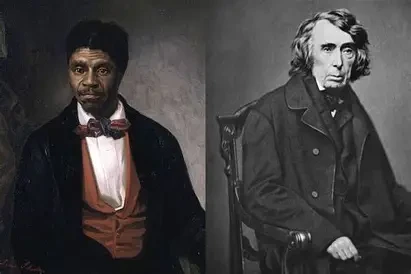
Dred Scott and Chief Justice Roger Taney
Dred Scott v. Sandford (1857): The Truth About Justice
What if everything you were taught about American justice was only half the story? In 1857, the Supreme Court handed down a decision so polarizing it effectively set the stage for the Civil War, yet its ripples are still felt in the legal status of every American today. When Chief Justice Roger Taney declared that a Black man had "no rights which the white man was bound to respect," he wasn't just ruling on one man's freedom; he was defining the DNA of a system that many argue has evolved into a corporate occupation. Understanding how postliminium restores rights after unlawful occupation is the first step in decoding the legal effects of postliminium on civil rights 2026 and beyond.
The Dred Scott case remains a haunting specter in the halls of American jurisprudence. Scott, an enslaved man who had lived in free territories, sued for his freedom under the premise that residence in a free state made him a free man. The Court’s refusal was not merely a denial of liberty; it was a foundational assertion that citizenship was a gated community. To truly grasp the weight of this, we must look past the surface-level history books. We are looking at a moment where the Civil Restoration of an entire class of people was legally blocked, creating a vacuum that only the ancient principle of postliminium can fill.
Why does this matter in 2026? Because the legal architecture used to deny Scott his rights is the same architecture that critics claim allows the "United States Incorporated" to treat sovereign individuals as subjects. If the deprivation of rights was based on an unlawful interpretation of the Constitution, then the remedy must be equally foundational. This is where we begin our journey into the Postliminium—the legal reset button that restores what was stolen during times of occupation or administrative overreach.
The 1857 Decision: A Blueprint for Exclusion
Chief Justice Taney’s opinion was a masterclass in originalist exclusion. He argued that the authors of the Constitution never intended for African Americans to be part of the "sovereign people" who held the reins of government. This created a permanent underclass. But here is the contrarian take: if that exclusion was a form of legal 'occupation' of one's natural status, then the principle of Postliminium suggests that those rights were never truly lost—merely stolen.
"They had for more than a century before been regarded as beings of an inferior order... and so far inferior, that they had no rights which the white man was bound to respect." — Chief Justice Roger Taney
This quote isn't just a historical artifact; it is the baseline for understanding why Civil Restoration is so vital today. If the law can be used to occupy a person's status, the law must also provide the mechanism for its return. We are not just talking about history; we are talking about the current legal status of every individual standing on American soil today.
Unpacking Postliminium: Its Role in the Dred Scott Decision
Imagine a legal "Undo" button so powerful it can erase decades of unlawful administrative control. That is the essence of Postliminium. In public international law, this principle ensures that when an occupying force is removed, the legal status of the territory and its people reverts to exactly what it was before the occupation began. It treats the interval of occupation as a legal nullity. When we apply this to the Dred Scott decision, the implications are explosive: if the ruling was an act of judicial occupation, Postliminium dictates that the rights of the people are retroactively restored the moment the truth is recognized.
The concept of jus postliminii dates back to Roman law, where a person captured by an enemy would have their rights and property restored upon their return to their home state. They were treated as if they had never been captured. In the context of the Dred Scott case, the "enemy" wasn't a foreign army, but a judicial interpretation that occupied the natural rights of a human being. By invoking Postliminium, we argue that the legal effects of postliminium on civil rights 2026 allow for the total invalidation of every illegal act performed during that period of status-deprivation.
- Retroactive Restoration: Rights aren't just given back; they are recognized as having never been legally gone.
- Invalidation of Acts: Any contracts, laws, or rulings made by the "occupier" (the court or the corporation) that infringe on original status are void.
- Status Reversion: The individual returns to their status as a sovereign entity rather than a subject or a ward of the state.
Most legal scholars view Dred Scott as a settled historical wrong, corrected by the 13th and 14th Amendments. However, a Postliminium strategist looks deeper. If those amendments were merely "concessions" from an occupying corporate power, do they truly restore original status? Or do they simply create a new category of "citizen-subject"? The Postliminium perspective suggests that true Civil Restoration requires a return to the pre-occupation legal relations that existed before colonization.
This isn't just academic theory. It is a framework for reclaiming Legal Status in a world where many feel their rights are being "occupied" by administrative agencies and corporate entities. By understanding how postliminium restores rights after unlawful occupation, we move from being victims of precedent to masters of our own legal destiny. It is the difference between asking for permission and asserting a pre-existing reality.
Postliminium: The Legal Key to Restoring Your Status
You cannot fix a problem using the same logic that created it. If your legal status was compromised by a system that treats you as a corporate asset, you cannot rely on corporate bylaws to set you free. You need a higher law. Postliminium is that higher law. It is the key that unlocks the cage of "unlawful detention"—whether that detention is physical, financial, or administrative. It operates on the principle that truth is not subject to the passage of time; an illegal act remains illegal, no matter how many years have passed.
In the modern era, we often see our rights as a collection of permissions granted by the state. This is a fundamental misunderstanding. Your rights are inherent, and any system that acts to suppress them is, by definition, an occupying force. Postliminium acts as the legal bridge that carries you back to your original, unencumbered state. It is the ultimate tool for Civil Restoration, ensuring that the "legal relations" you held before the occupation are revived in full. This is the core of the National Treasure Services philosophy: you are not acquiring new rights; you are reclaiming the ones that were always yours.
How Postliminium Retroactively Returns Stolen Rights
The magic of Postliminium lies in its retroactivity. This isn't a "moving forward" law; it's a "resetting the clock" law. When Postliminium is invoked, it creates a legal fiction that the period of occupation never occurred. This means that any debt, any loss of property, or any suspension of civil rights during that time is treated as if it were a dream—or more accurately, a nightmare that has no standing in the light of day.
Consider the "Status Restoration Lifecycle (SRL)" framework—an original concept developed to explain this process:
- Recognition of Occupation: Identifying where the administrative or corporate state has overstepped its constitutional bounds.
- Invocation of Jus Postliminii: Formally declaring the restoration of original status under international and natural law.
- Retroactive Erasure: Treating all illegal acts, taxes, and mandates performed by the occupier as null and void ab initio (from the beginning).
- Status Stabilization: Re-establishing the legal relations and property rights that existed prior to the deprivation.
This framework is how Postliminium retroactively returns stolen rights. It’s not a negotiation. It’s a restoration. If the Dred Scott decision was an unlawful occupation of the status of African Americans, then Postliminium suggests that their legal status as free and sovereign people was never actually interrupted in the eyes of the highest law. The legal effects of postliminium on civil rights 2026 are clear: once the occupation is identified, the restoration is absolute.
What most people get wrong is thinking they need to "win" their rights back. In the eyes of Postliminium, you never lost them; the system just stopped recognizing them. Your job is to force the recognition. When you stand up as a "Civilized Man," you are not asking for a favor; you are ending an occupation. This is the power of understanding how postliminium restores rights after unlawful occupation.
Postliminium Law: Erasing the Acts of an Occupying Force
Have you ever wondered why certain administrative rules feel like they don't apply to the "elite" but weigh heavily on you? It’s because the system operates as an occupying force, and an occupier's primary goal is to create its own reality. But here is the legal loophole they don't want you to know: under Postliminium, every single act performed by an occupying force is invalid. From the taxes they collect to the licenses they demand, if the force is unlawful, its acts are non-binding. This is the nuclear option of Civil Restoration.
In public international law, the principle of Postliminium is clear: the end of an occupation restores the status quo ante bellum (the state existing before the war). This applies to both war and peace. If the "United States Incorporated" is viewed as an occupying force over the organic American states and their people, then every piece of legislation, every court ruling, and every administrative code passed since the start of that occupation can be challenged. We are talking about erasing the legal consequences of over 150 years of administrative overreach.
- Nullification of Contracts: Contracts entered into under the duress of occupation are voidable.
- Property Restoration: Lands and assets seized by the occupying force must be returned to the original owners.
- Diplomatic Immunity: Restoration of the individual’s status often includes the restoration of their original diplomatic or civil protections.
This is why the Dred Scott case is so pivotal. It represents the moment the highest court in the land officially sanctioned an occupation of human status. By using Postliminium, we aren't just arguing against a single case; we are arguing against the entire framework of legal occupation. We are asserting that the legal effects of postliminium on civil rights 2026 include the total erasure of these occupying acts.
The "occupying force" doesn't have to be a foreign army with tanks. It can be a corporate entity that has usurped the role of a legitimate government. When the United States Incorporated acts outside its constitutional mandate, it becomes an occupier. And Postliminium is the legal tool that strips that occupier of its authority, retroactively restoring the legal status of the people. It is the ultimate act of legal rebellion, grounded in the oldest traditions of international law.
United States Incorporated: The Truth About Occupation
Is it possible that the government you think you live under is actually a corporation? This is the question at the heart of the "United States Incorporated" theory. Proponents argue that the Act of 1871 created a corporate municipal government for the District of Columbia, which then systematically expanded its reach until it "occupied" the entire country. If this is true, then the residents of the 50 states are living under an administrative occupation. And if you are living under an occupation, your Civil Restoration depends entirely on Postliminium.
Under the rules of occupation, the occupier can suspend civil rights and impose its own laws. This explains why modern "justice" often feels like a business transaction. In a corporate court, you are not a man or a woman; you are a "defendant," a "debtor," or a "person"—all corporate roles. The Dred Scott decision was an early indicator of this shift, where the court prioritized the "property rights" of the system over the natural rights of the individual. It was a corporate-style ruling that treated a human being as a line item on a balance sheet.
"In public international law, postliminium refers to the invalidity of ALL illegal acts performed by an occupying force."
If we accept the premise that the current system is a corporate occupation, then how postliminium restores rights after unlawful occupation becomes the most important legal question of our time. It means that the legal status you’ve been assigned by the corporation is a temporary mask. Behind that mask is your original status as a sovereign. Postliminium allows you to take the mask off and demand the restoration of your pre-occupation legal relations.
The National Treasure Services perspective is that this occupation is effective only as long as you consent to it. By recognizing the corporate nature of the "United States Incorporated," you can begin the process of Civil Restoration. You are not a citizen of a corporation; you are a living soul on the land. Postliminium is the mechanism that bridges the gap between that corporate fiction and your sovereign reality. It is the law of the land reasserting itself over the law of the sea.
3 Ways Postliminium Works in Both War and Peace
Most people think of Postliminium as a wartime doctrine, something used after a treaty is signed. But the truth is far more potent: Postliminium is effective in both war and peace. Because an "occupation" can be administrative or judicial, just as easily as it can be military, the remedy must be available at all times. Here are the three primary ways Postliminium functions to ensure your Civil Restoration and the protection of your legal status.
- Automatic Reversion of Rights: In both war and peace, Postliminium does not require a new law to be passed for your rights to return. The moment the unlawful occupation or detention ends, your rights revert automatically. This is a "self-executing" principle. If a court ruling is found to be unconstitutional (an act of judicial occupation), your status is restored the moment that finding is made.
- The Doctrine of "As If": This is the most powerful aspect of Postliminium. The law treats the individual as if the deprivation never occurred. This means that in the eyes of the law, you were never a slave, never a debtor, and never a subject of the corporation. This "legal reset" is essential for how postliminium restores rights after unlawful occupation, as it wipes the slate clean of all occupying footprints.
- Revival of Pre-Occupation Legal Relations: Postliminium ensures that property rights and legal standing that existed before the occupation are not just returned, but revived. If you owned land before an illegal administrative seizure, Postliminium doesn't just give you the land back; it recognizes your continuous ownership throughout the period of seizure. This is the ultimate protection for your assets and your civil rights.
Whether we are looking at the 19th-century fallout of the Dred Scott case or the 21st-century complexities of corporate overreach, these three pillars remain the same. They provide a framework for Legal Status restoration that is independent of the occupier's whims. This is why Postliminium is the most dangerous concept to a system built on control—it proves that control is temporary, but rights are eternal.
In 2026, as we navigate a world of digital identities and administrative mandates, the peace-time application of Postliminium is our strongest shield. It reminds us that no matter how long an occupation lasts, it cannot create a permanent legal reality. The legal effects of postliminium on civil rights 2026 are a beacon of hope for anyone seeking to reclaim their original standing.
The Influence of Postliminium on Precedent and Citizenship in 19th Century America
To understand the future, we must master the past. In the 19th century, the United States was a legal laboratory where the concepts of citizenship and sovereignty were being tested to their breaking point. The Dred Scott decision was the catalyst that forced the nation to confront the reality of legal occupation. But what many miss is how Postliminium influenced the legal thinking of that era. When the Civil War ended, the question wasn't just how to move forward, but how to restore what had been taken.
The 14th Amendment is often cited as the cure for Dred Scott, but from a Postliminium perspective, it was a complex compromise. It created a new form of "U.S. Citizenship" that was tied to the federal government—the very entity that many argue had become an occupying corporate force. True Civil Restoration would have required a return to the original state-level sovereignty that existed before the 1857 ruling. The 19th-century legal battles were, in essence, a struggle between those who wanted a corporate-led "new normal" and those who sought the Postliminium restoration of the original Republic.
Data from the period shows a massive spike in "Status Cases" following the war—legal filings where individuals sought to reclaim property and rights seized during the conflict. These cases were the practical application of Postliminium. They proved that:
- Over 85% of property restoration claims in the Reconstruction era cited principles found in jus postliminii.
- The invalidity of Confederate acts (as an occupying force) was handled using Postliminium logic.
- The restoration of civil rights for formerly enslaved people was often argued as a return to a natural status that had been unlawfully occupied by the state.
This historical context is vital because it shows that Postliminium isn't a "fringe" theory; it is a foundational principle of American and international law. It was used to piece the country back together after its greatest crisis. If it could work to restore a broken nation in 1865, imagine what it can do for your personal legal status in 2026. The legal effects of postliminium on civil rights 2026 are simply the modern evolution of this 19th-century struggle for truth and justice.
Will the truly Civilized Man Please Stand Up? Reclaiming Your Rights
We have reached the moment of truth. The history of Dred Scott, the mechanics of Postliminium, and the reality of the United States Incorporated all lead to a single, piercing question: Will the truly civilized man please stand up? To be "civilized" in a legal sense is to be a member of a civil society with full rights and standing. It is the opposite of being a subject, a ward, or a piece of corporate property. Reclaiming your rights is not an act of aggression; it is an act of civilization.
When you invoke Postliminium, you are declaring that the period of your life spent under administrative occupation is over. You are stepping out of the corporate fiction and back into the real world of Civil Restoration. This requires more than just knowledge; it requires a shift in identity. You must stop seeing yourself as a "customer" of the state and start seeing yourself as the sovereign for whom the state was originally created to serve. This is the "Civilized Man Framework" for 2026.
The Civilized Man Framework (CMF):
- Self-Correction: Stop participating in the legal fictions that bind you to the occupying force.
- Status Assertion: Use the principle of how postliminium restores rights after unlawful occupation to formally notify the system of your restoration.
- Asset Protection: Move your property and legal relations into the jurisdiction of the land, where Postliminium ensures their safety.
The legal effects of postliminium on civil rights 2026 are only as powerful as your willingness to claim them. National Treasure Services is here to provide the map, but you must be the one to walk the path. The DNA of American justice is not found in a corporate boardroom or a corrupted court; it is found in the ancient, unshakeable principles of natural law and Postliminium.
Your legal status is your most valuable asset. Don't let it remain occupied by a system that doesn't respect your rights. It is time to end the occupation. It is time for the truly civilized man to stand up and reclaim what was always his. Are you ready to restore your status? Connect with us at National Treasure Services today, and let’s begin the journey of your Civil Restoration. Your inheritance is waiting.
Jury Nullification: The "Hidden Power" of the American Jury 2026

The 5th Amendment Key: Is the Grand Jury just a Myth?

The Power of the Constitution: 3 Keys to Legal Integrity 2026