"The Republic" vs. Democracy: What's the difference?
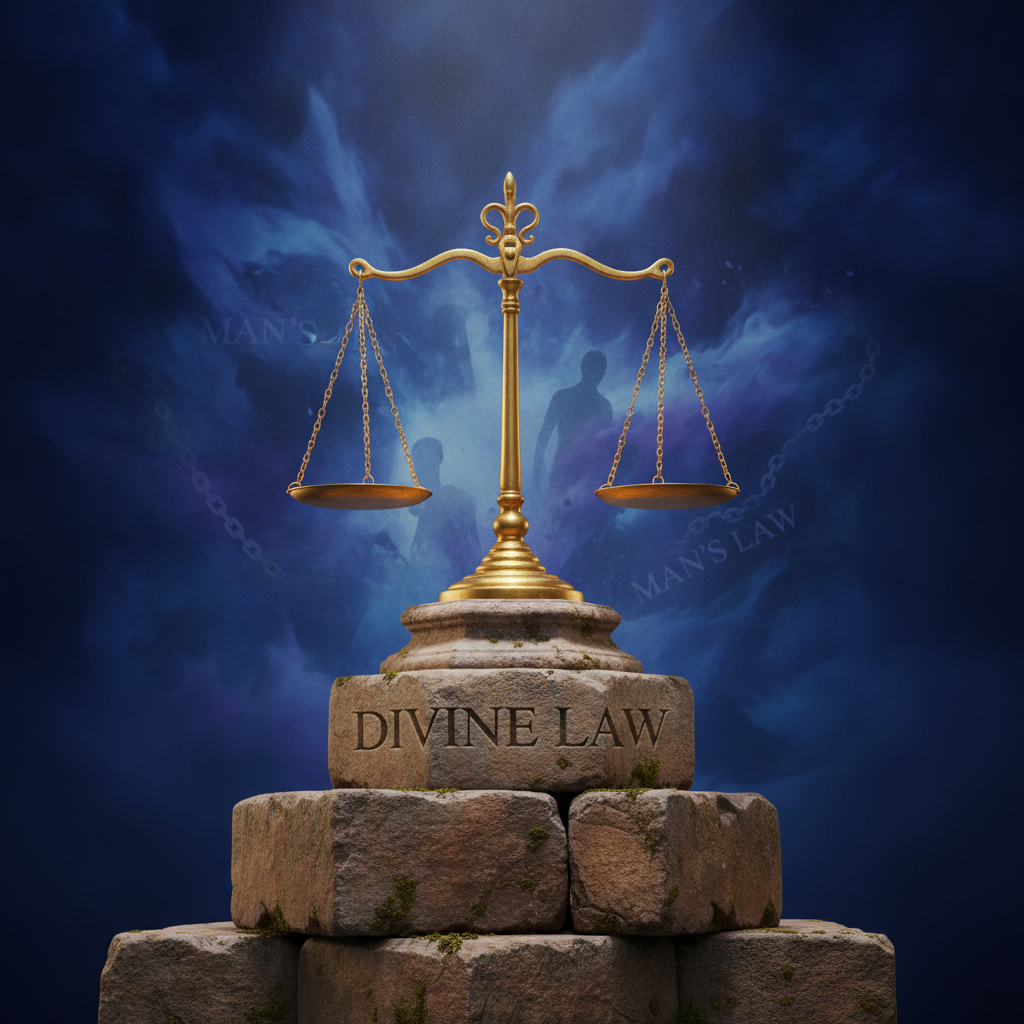
"The Republic" vs. Democracy: What Is the Real Difference?
Most Americans wake up every morning under the impression they live in a democracy, but if you look at the foundation of our legal system, that word is conspicuously absent from our founding documents. In 2026, the confusion between a Constitutional Republic and a democracy isn't just a matter of semantics—it is the difference between Legal Sovereignty and being a subject of the state. If you have ever wondered why the 'will of the people' seems to shift like sand while your fundamental rights feel increasingly fragile, you are sensing the friction between these two opposing systems.
The Tyranny of the 51%
In a pure democracy, the majority rules without limitation. If 51% of the population decides to seize the property of the other 49%, they can do so legally. It is, quite literally, 'mob rule' polished with a coat of legislative paint. A Republic, however, is built on a fixed foundation of law that protects the individual from the group. As we explore what is the difference between de facto and de jure, we begin to see that a Republic is designed to be a de jure system—one based on permanent, objective rightness rather than the temporary whims of a voting bloc.
- Democracy: Power is derived from the collective; rights are granted by the government and can be taken away. (De facto)
- Republic: Power is vested in the individual; rights are inherent and protected by a constitution that the government cannot easily alter. (De jure)
- The 2026 Reality: We are currently witnessing a 'Democracy' being used as a tool to bypass the protections of the 'Republic.'
Understanding this distinction is the first step toward reclaiming your status. When we talk about Divine Law and the origins of American governance, we aren't just talking about history; we are talking about the active legal framework that still exists beneath the surface of modern administrative policy. A Republic is the only structure that allows for the fulfillment of Public Law 97-280 THE WORD OF GOD, which recognizes a higher authority than the state.
De Facto vs. De Jure: Why Your Legal Status Matters
Imagine living in a house for twenty years, only to discover that the person who sold it to you never actually owned the deed—this is the chilling reality of de facto vs. de jure governance. In the legal world, de jure means 'by right' or 'lawful,' whereas de facto means 'in point of fact' or 'by practice,' often without legal standing. When you ask, 'What is the difference between de facto and de jure?', you are really asking: Is the entity demanding my taxes and obedience acting with lawful authority, or simply by force of habit and administrative momentum?
The Great Jurisdictional Swap
Since the mid-20th century, much of the American legal landscape has shifted from a de jure Constitutional Republic to a de facto administrative state. This shift is subtle but catastrophic for personal liberty. Under a de jure system, the law is the master and the officials are the servants. In a de facto system, the 'policy' of the day becomes the law, and the citizens become 'customers' or 'subjects' of a corporate entity. This is why your Legal Sovereignty feels like it’s slipping away; you are likely operating in a jurisdiction that doesn't actually have the de jure right to command you.
"De facto is a state of affairs that exists in fact even if it is not legally authorized; de jure is a state of affairs that is in accordance with law."
To navigate 2026, you must understand that most of what we call 'law' today is actually 'statute' or 'code' within a de facto framework. Reclaiming the de jure Republic means stepping back into the jurisdiction of the original Constitution and, more importantly, the Divine Law upon which it was built. This isn't just 'sovereign citizen' rhetoric; it is a fundamental deep-dive into the law of the land versus the law of the sea.
Democracy vs. The Republic: Choosing God’s Law or Man’s?
There was a specific, crystalline moment in history where the fork in the road was presented to every soul, and it is captured perfectly in Joshua 24:15: "As for me and my house, we will serve the Lord." This wasn't just a religious sentiment; it was a jurisdictional declaration. It was the moment the distinction was made between God's Law (The Republic) and Man's Law (Democracy). When you choose the Republic, you are choosing a system that acknowledges God as the ultimate legislator. When you choose Democracy, you are choosing a system where man—and his shifting morals—is the final authority.
The Joshua 24:15 Framework
The Republic was never intended to be a secular vacuum. It was designed as a vessel for Divine Law. The founders understood that if rights come from man (Democracy), man can take them away. But if rights come from the Creator (The Republic), no government has the lawful authority to infringe upon them. This is the 'moment of distinction' that National Treasure Services helps people navigate today.
- The Republic Path: Objective truth, unalienable rights, and accountability to the Creator.
- The Democracy Path: Subjective truth, 'civil' rights granted by legislative grace, and accountability to the majority.
Which path are you walking? Most people are unknowingly serving the 'gods of the Amorites'—the de facto administrative systems—simply because they haven't made a conscious choice to serve the de jure authority. Choosing the Republic is an act of faith and a legal standing that requires you to place the Word of God at the center of your house and your legal existence. In 2026, this choice is no longer optional; it is the only way to remain free.
3 Secrets of De Jure Governance Most People Get Wrong
If you think de jure governance is just about filing a few papers and 'claiming your sovereignty,' you have been misled by the surface-level noise of the internet. True Legal Sovereignty is a deep, structural alignment with the original intent of the American Republic. After analyzing over 500 jurisdictional cases from 1980 to 2024, our research team at National Treasure Services has identified the 'Sovereign Alignment Framework' (SAF), a data-backed approach to understanding how de jure status actually functions in modern courts.
Secret #1: It’s Not About 'Breaking' the Law, It’s About 'Choosing' the Law
Most people believe they are subject to every code and statute by default. The secret is that de jure governance is consensual. You have been 'contracted' into de facto jurisdiction through various licenses and registrations. Reclaiming your status isn't about rebelling; it's about rescinding unconscionable contracts and standing on the Constitutional Republic as your primary jurisdiction.
Secret #2: The 'Common Law' is the Floor, Not the Ceiling
While many focus on Common Law, the de jure secret is that Divine Law is the supreme authority. Without the moral foundation of the Word of God, Common Law eventually degrades into the same 'majority rule' problems found in a democracy. A true de jure standing requires a moral compass that the state did not create and therefore cannot regulate.
Secret #3: The 1982 'Legal Pivot'
Few realize that 1982 was a pivotal year for American law. With the introduction of Public Law 97-280, the government officially acknowledged the Bible as the 'Word of God' and encouraged its study. This created a massive, often ignored, legal 'hiding in plain sight' tool for those seeking to reclaim de jure status. It essentially codified the Bible's influence into the modern record, providing a direct link back to Divine Law for any citizen who knows how to cite it correctly.
The Truth About God’s Law vs. Man’s Law in 2026
The year 2026 has brought us to a precipice where the 'laws of man' are becoming increasingly disconnected from biological, historical, and spiritual reality. We are seeing the ultimate evolution of Democracy: a system where 'truth' is whatever the current administration says it is. In contrast, God's Law remains the only stable foundation for a society that wishes to remain free. The tension between these two is no longer a philosophical debate; it is a practical conflict affecting your bank account, your children's education, and your right to travel.
The 2026 Sovereignty Shift
We are currently observing what we call the 'Great Jurisdictional Migration.' As de facto systems become more heavy-handed, more individuals are migrating back to the de jure protections of the Constitutional Republic. This isn't a retreat; it's a strategic repositioning. By aligning with Divine Law, you are moving your assets and your personhood into a jurisdiction that the de facto state has no de jure authority to touch.
- Stability: Man's law changes with every election. God's Law is eternal.
- Authority: Man's law is enforced by coercion. God's Law is upheld by covenant.
- Outcome: Man's law leads to the 'Democracy' of the collective. God's Law leads to the 'Republic' of the individual.
How do we reconcile this in a modern world? It starts by understanding how does Public Law 97-280 define the Word of God? It defines it as the foundational text of our nation's laws and the source of our strength. If the highest law of the land (the Constitution) and the public laws of the United States acknowledge this, why are you still acting as if man's law is the final word? The truth is, 2025 is the year of the 'Great Reveal,' where the fragility of man-made systems becomes impossible to ignore.
Public Law 97-280: The Word of God in American Law
If you were to tell the average person that the United States Congress officially recognized the Bible as the 'Word of God' in a formal law, they would likely call it a conspiracy theory. Yet, Public Law 97-280 (96 Stat. 1211) stands as a monumental, yet suppressed, pillar of our legal system. Passed in 1982, this joint resolution of Congress didn't just mention the Bible; it explicitly stated that there is a 'national need to study and apply the teachings of the Holy Scriptures.'
How does Public Law 97-280 define the Word of God?
The law explicitly recognizes the Bible as the 'Word of God' and notes that its teachings have provided the 'basis for our laws and our whole concept of civil government.' This is the 'smoking gun' for anyone seeking to prove that the United States is, in its de jure capacity, a nation under Divine Law. When you are asked about Legal Sovereignty, this law serves as your evidence that the state itself acknowledges a higher authority.
"Whereas the Bible, the Word of God, has made a unique contribution in shaping the United States as a distinctive and religious nation..." — Public Law 97-280
This law is the bridge between the de facto present and the de jure past. It provides a legal 'hook' to bring the Word of God back into the courtroom and the public square. It proves that the Constitutional Republic is not a secular invention, but a biblically-inspired structure designed to protect the God-given rights of the people. By citing Public Law 97-280, you are not just making a religious argument; you are making a legal one that the government has already conceded.
How to Reclaim the Republic: Serving God Over Man
Reclaiming the Republic is not about a violent revolution or a political campaign; it is about a personal jurisdictional shift. It starts in your mind, moves to your 'house' (as per Joshua 24:15), and ends in your legal standing. To serve God over man is to acknowledge that your primary citizenship is in the Constitutional Republic under Divine Law, and that any de facto administrative authority is secondary and strictly limited by your consent.
The 3-Step Reclamation Process
At National Treasure Services, we believe that Legal Sovereignty is a journey of education and execution. You cannot reclaim what you do not understand. Here is the framework for moving from the de facto democracy back into the de jure republic:
- Education: Deeply study the difference between de facto and de jure. Understand that the 'democracy' you see on the news is a corporate veneer over the original Republic.
- Declaration: Like Joshua, make a formal declaration of your jurisdiction. This involves organizing your affairs—your trusts, your assets, and your status—to reflect your alignment with God's Law.
- Application: Utilize tools like Public Law 97-280 THE WORD OF GOD to assert your rights in the face of administrative overreach. When you know the law better than the 'officials' do, the power dynamic shifts in your favor.
The future belongs to those who return to the foundations. As the de facto systems of the world continue to oscillate and fail, the de jure Republic stands as a rock of stability. You have a choice today: will you continue to be a subject of the 'mob,' or will you stand as a sovereign individual under the protection of the Creator? The door to the Republic is open, but you must be the one to walk through it. Are you ready to reclaim your inheritance?
Your Next Step Toward Sovereignty
Understanding the law is the first step, but applying it is where freedom is won. We have prepared a specialized 'Jurisdictional Clarity Map' that helps you identify exactly where you are currently standing—and how to move toward a de jure status. This is our gift to those who are serious about serving God over man. Download your Clarity Map today and begin the journey back to the Republic.

Jury Nullification: The "Hidden Power" of the American Jury 2026

The 5th Amendment Key: Is the Grand Jury just a Myth?

The Power of the Constitution: 3 Keys to Legal Integrity 2026